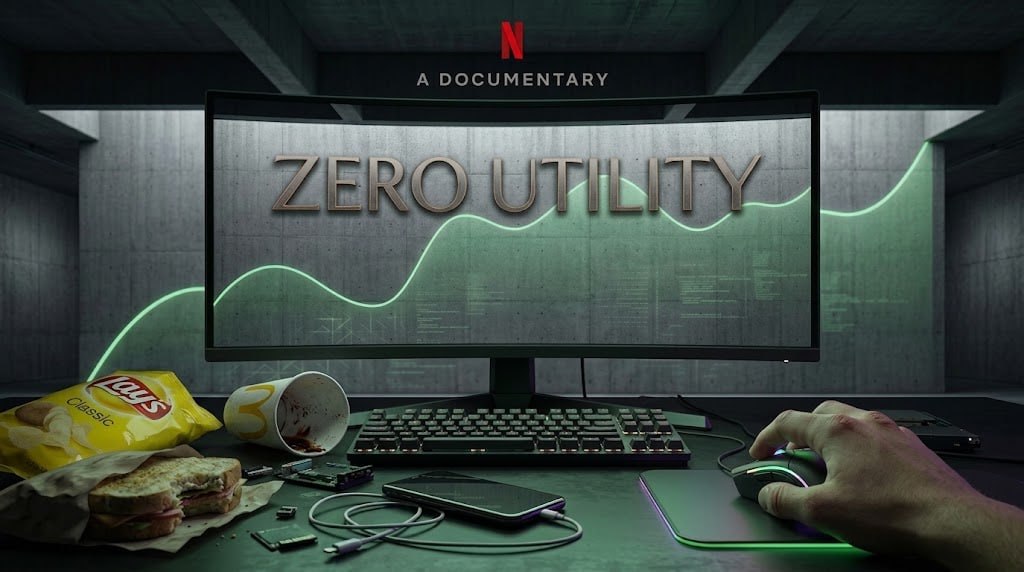
The glow of the monitoring charts is the only light in the room. It’s 3:00 AM, and the protagonist of Netflix’s latest cultural deep-dive is relentlessly scanning the Solana ecosystem, hunting for the next viral cultural narrative to drop. This is the visceral opening of _Zero Utility_, a film that finally captures what the crypto market has actually become since the frenzy of late 2023. Gone are the tech evangelists preaching about the fundamentals of decentralized banking; in their place is a new breed of financial nihilists locked in a high-speed, cutthroat player-versus-player arena.
The documentary brilliantly reframes the memecoin phenomenon not just as digital gambling, but as a direct sociological response to a broken economic ladder. It positions these traders as a high-octane parallel to the NEET or "lying flat" movements. Why wait forty years for a meager index fund return when the traditional milestones of homeownership feel mathematically impossible to reach on a normal salary? _Zero Utility_ argues that for this demographic, the rational response is to embrace the absurd. They aren't investing in companies; they are trading pure attention, attempting to front-run internet culture before it hits the mainstream.
The film captures the sheer, grinding exhaustion of surviving in the trenches. It doesn't shy away from the technical grit required to stay afloat: deploying automated sniping tools, tracking developer wallets, and enduring the psychological whiplash of watching a portfolio multiply by ten and then collapse to zero in the span of a single afternoon. Viewers are plunged into a world where having actual utility is a liability, and identifying the right narrative is the only survival skill that matters.
Ultimately, _Zero Utility_ succeeds because it refuses to merely mock its subjects. It presents a stark, unapologetic look at a generation that looked at the rigged casino of modern capitalism and decided to build their own, much faster, and infinitely more chaotic version.
What aspect of this lifestyle do you think a documentary like this would struggle the most to accurately capture on camera?