At least 44 people died after a Zimbabwean government passenger ferry capsized on Lake Kariba, police said as search and rescue operations continued. The vessel overturned in rough conditions while travelling across the lake, which lies along the border with Zambia.
Zimbabwe's Civil Protection Unit initially said 77 people had been rescued and 15 bodies recovered. Police later raised the death toll to 44. Because recovery work was still under way, the figures represented an evolving official count rather than a final accounting.
The Rural Infrastructure Development Agency ferry carried passengers between Kariba town and islands and fishing communities around the lake. It was an important connection for rural villagers and traders travelling to the commercial centre.
The Civil Protection Unit said the ferry had capacity for 90 people but was carrying 114 adult passengers, five crew members and an unspecified number of children. That means at least 119 people were aboard, with the full total unknown. The reported load exceeded the stated capacity even before the children were counted.
A survivor told state broadcaster ZBC that passengers asked the operator to turn back because of choppy water but that the request was refused. She said water was entering the vessel as waves strengthened. Her account had not yet been tested by an official investigation.
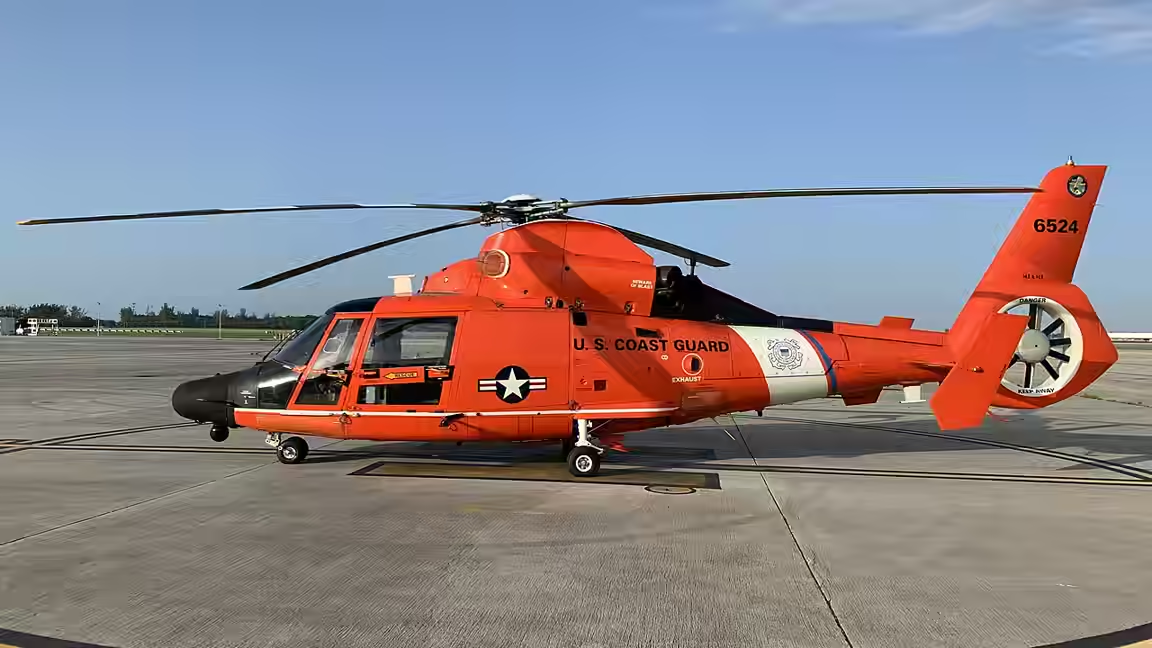
Witness Maxton Kanhema said the ferry left in poor weather and may have been struck by a wave that stopped its engines. He was aboard a smaller boat that responded after a distress signal. Kanhema described bodies and personal items in the water as nearby vessels attempted rescues. Video showed a helicopter above the overturned hull while boats converged on the scene.
Local divers, army personnel and other responders joined the operation. A specialised aquatic rescue unit was flown to the area, and funeral parlours were engaged to recover the dead, authorities said.
President Emmerson Mnangagwa declared the sinking a national disaster and said it exposed deficiencies in Zimbabwe's maritime capabilities. His statement pointed toward a wider safety review but did not determine the immediate cause.
The evidence identifies several issues for investigators: the vessel's reported overload, deteriorating weather, claims that it was already taking on water and the operator's alleged refusal to turn back. None alone had been established as the definitive cause. With children not included in the supplied onboard total and search teams still active, both the number of people aboard and the final toll remained subject to revision. Responders also had to reconcile the adult and crew figures with an unspecified number of children.