# Searchers recover two bodies after Broad Peak avalanche as Nirmal Purja remains missing
*By NeoTechNews Desk*
Rescue teams searching Pakistan’s Broad Peak recovered two bodies and a body part on event date 2026-07-31, while ten climbers remained unaccounted for after an avalanche struck one of the world’s highest mountains. The supplied BBC extract says earlier reports had wrongly stated that four bodies were recovered, with the Alpine Club of Pakistan later blaming that discrepancy on a “miscommunication” [Source 15148].
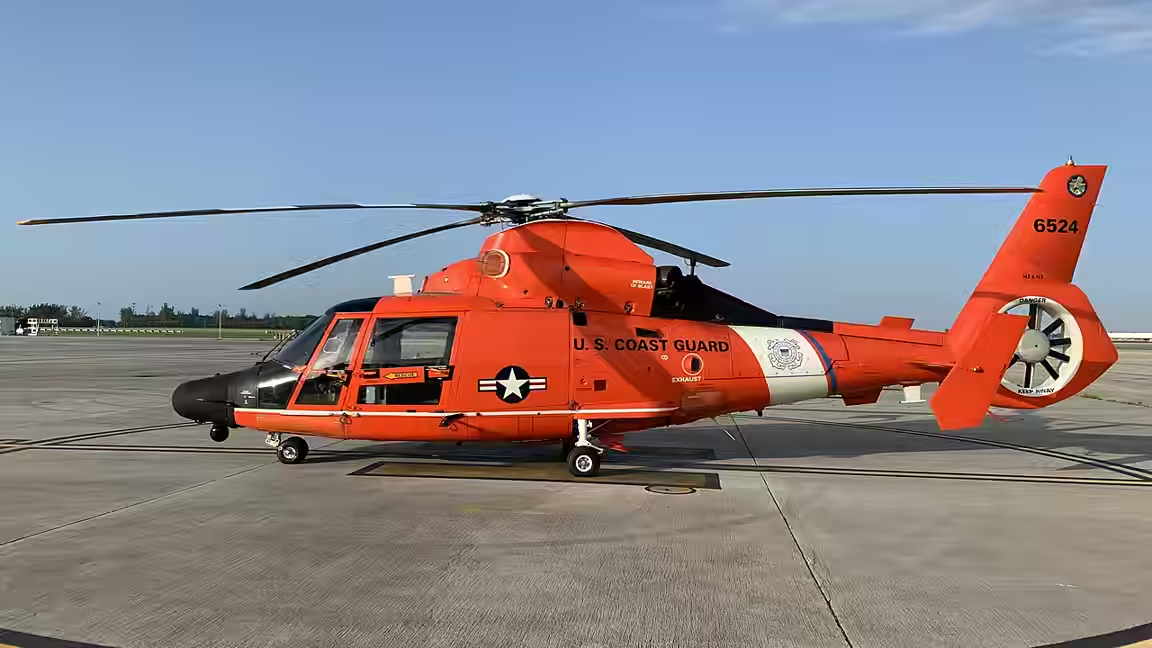
The avalanche occurred around midday local time on Thursday on Broad Peak in Pakistan-administered Gilgit-Baltistan, according to the report. All ten climbers had been out of communication since then, turning the rescue effort into a race against terrain, altitude and weather. Pakistan’s army dispatched two helicopters, but the Gilgit-Baltistan home secretary told the BBC that the search had to be suspended for the day because of weather conditions and was expected to continue the following day [Source 15148].
Among the missing is Nirmal Purja, the prominent mountaineer best known for climbing the world’s 14 tallest peaks in a little over six months in 2019. His inclusion transforms the story from a severe but localised mountain disaster into an incident with international mountaineering attention. Purja’s profile means the search is being watched not only for the toll on the broader climbing team but also for what it may mean for one of the most recognisable high-altitude athletes of his generation [Source 15148].
The corrected casualty information is itself important. In mountain disasters, early counts often shift because information from extreme terrain arrives in fragments and rescue operations are constrained by weather, communications and visibility. The Alpine Club’s acknowledgement of miscommunication indicates the extent of that uncertainty. It also underlines why each update must be treated cautiously until search teams can physically confirm what they have found [Source 15148].
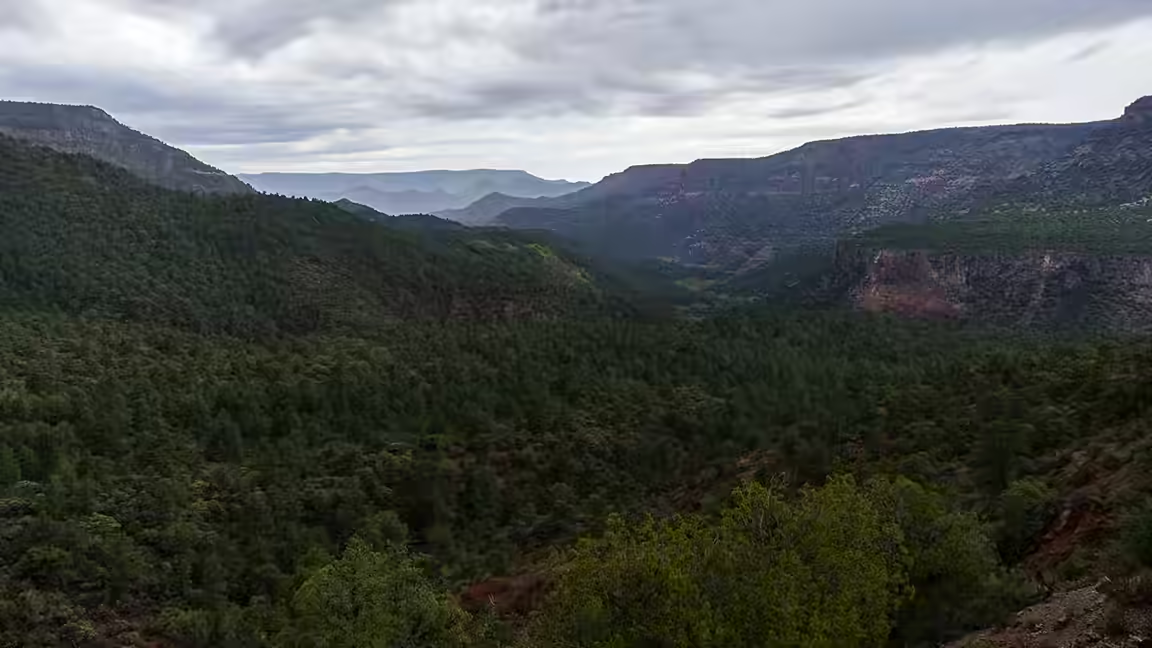
Broad Peak’s elevation and environment compound every part of the response. The extract does not specify the exact altitude of the avalanche zone, but it emphasises that the peak is one of the world’s highest, which is enough to establish the operational challenge. In such settings, helicopter access, survivor detection and body recovery all depend on narrow weather windows, and a suspended search can mean vital lost time even when rescuers intend to resume at first opportunity [Source 15148].
What the supplied evidence confirms is severe and limited in equal measure: ten mountaineers were declared missing, two bodies and a body part were found, the day’s search was halted by weather, and Purja remains among those still unaccounted for. Those facts do not resolve the outcome, but they define the scale of the emergency. On the evidence provided, Broad Peak has become the site of a major high-altitude rescue operation in which information remains fluid, survival prospects are uncertain and every new weather window may determine what searchers are able to learn next [Source 15148].