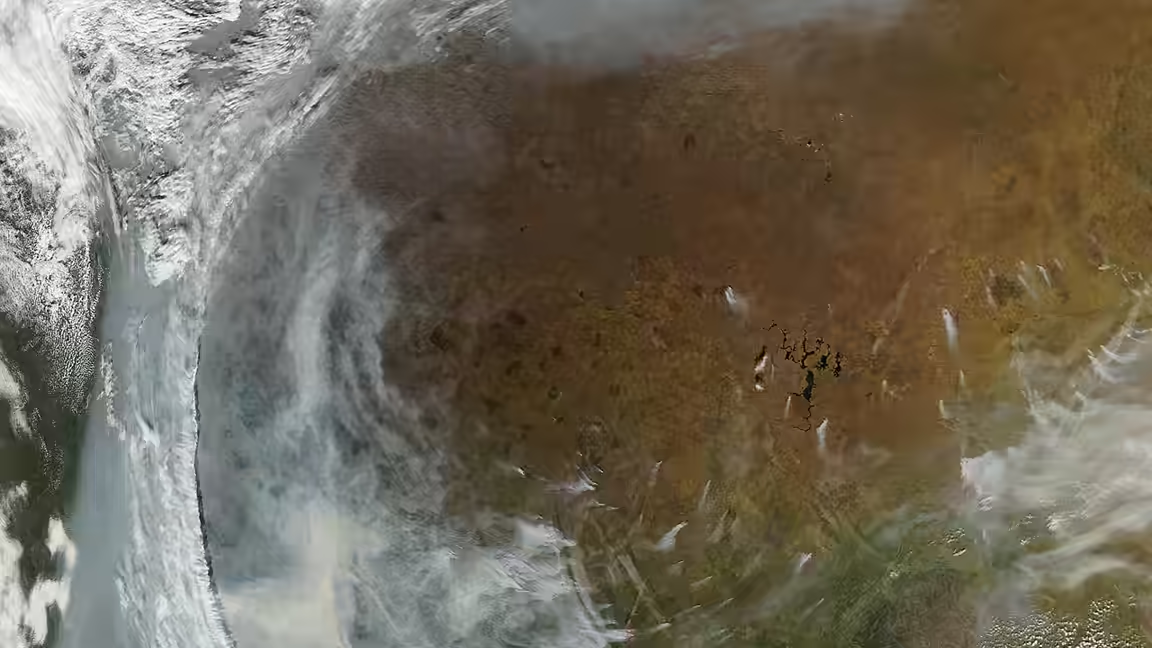
Firefighting efforts are currently a race against time, as weather forecasts predict a surge in temperatures exceeding 35 degrees Celsius starting Tuesday. Thousands of firefighters, supported by water-dropping aircraft and international assistance, are working to contain the flames before the conditions worsen. Crews have utilized heavy machinery to tear up forest land, creating firebreaks to prevent the blaze from reaching the outskirts of Bordeaux.
While France faces intense pressure, the situation in Spain is similarly dire. Wildfires have burned out of control in the Madrid and Valencia regions, forcing 79,000 people to evacuate and confining 30,000 others to their homes. In Ávila, west of Madrid, a fire has scorched 500 square kilometers, marking it as Spain's largest wildfire on record. Combined, the fires across France and Spain have displaced over 330,000 residents.
President Macron urged firefighters to remain strong, acknowledging that the fight is far from over. He noted that the displaced population is traumatized, with many having lost their homes and personal belongings. Authorities have implemented strict measures to protect the public, including banning holiday camps for children and those with disabilities in the Gironde region to keep tourists away from the danger zones.
International cooperation has played a vital role in the response, with about a dozen countries providing planes, helicopters, and personnel to both nations. The scale of the disaster has prompted renewed calls for stronger climate action. Spanish Prime Minister Pedro Sánchez stated that the current crisis is not a series of isolated incidents but a clear consequence of a climate emergency that is increasing the frequency and intensity of heat waves.
Local residents have expressed frustration and helplessness as they witness the destruction of their communities. Farmers have assisted by supplying water to fire crews, while volunteers have worked to provide support to those on the front lines. The emotional toll of the crisis is evident, with many citizens questioning the management of the disaster as their landscapes are turned to ash.
As the region enters the peak August tourist season, government officials continue to urge caution. The unpredictable nature of the firestorms, which have generated their own electrical activity, remains a significant challenge for emergency responders. Authorities remain focused on the immediate task of containment while preparing for the difficult weeks ahead as they continue to deal with tinder-dry forest conditions.