A government ferry carrying 133 passengers and crew has capsized off Guyana’s coast, leaving 66 people still missing after 67 survivors were rescued.
The MV Barima, which runs weekly trips to Indigenous communities near Venezuela, got into trouble shortly before midnight after leaving Georgetown earlier in the day. Guyanese Prime Minister Mark Phillips said the search and rescue response was underway across a wide area, while Public Works Minister Juan Edghill said a distress call came in at 11:01 p.m. and triggered the operation.
The rescue count is already substantial, but the numbers also show the scale of the emergency. The rescued group includes 41 men, 11 women and 15 children, according to the supplied AP report. That detail matters because it confirms that children were among those on board and among those saved. It also means the missing list includes people from across the vessel’s passenger mix, not a narrow subset.
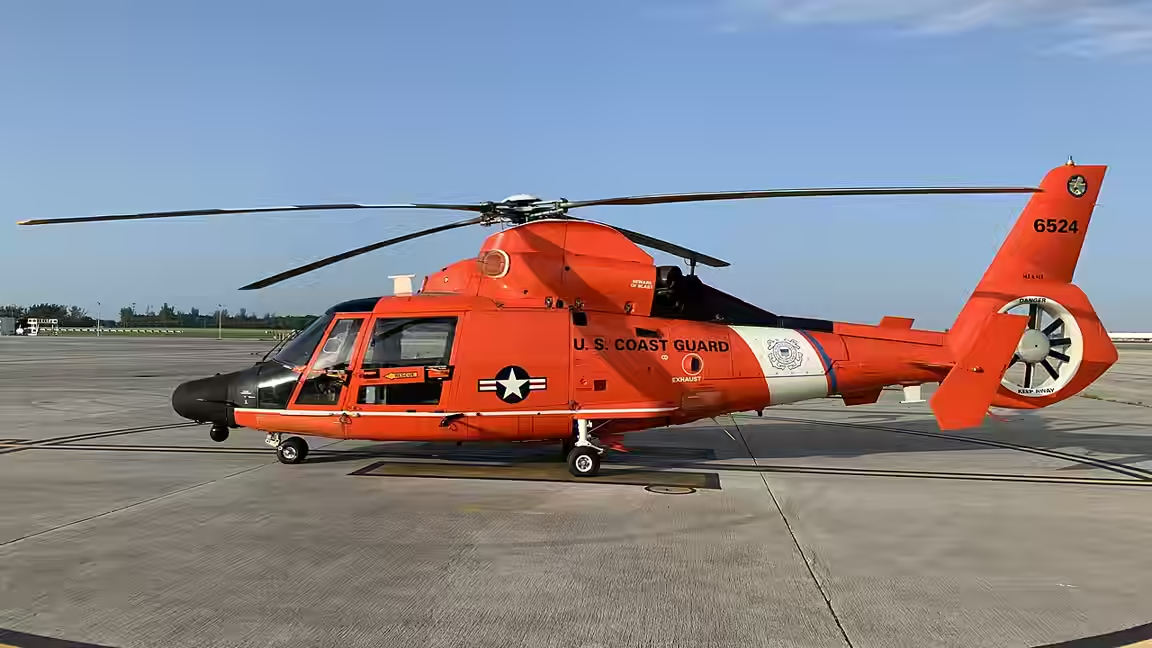
Authorities said helicopters, planes and fishing vessels were scanning roughly 1,000 square miles in the search effort. That wide search area suggests both the difficulty of the terrain and the urgency of locating survivors before conditions worsen. The vessel capsized near the Pomeroon River, an area tied to coastal and riverine travel routes in the country’s north.
Edghill said the ship was equipped with 250 life jackets, two rigid life rafts and six inflatable life rafts. He also pushed back on claims that the vessel may have been overloaded with passengers or cargo, saying instead that the incident had to do with the tide. On the supplied record, that explanation is the government’s position, not a final investigative finding.
The casualty picture remains fluid. Authorities had not said whether the missing were presumed dead. That caution is important because it leaves open the possibility of further rescues while also acknowledging the seriousness of the situation. At the moment, the dominant fact is that a routine government route turned into a major maritime emergency in the middle of the night.
For Guyana, the accident is likely to intensify scrutiny of river and coastal transport, especially on routes serving remote communities. Those passengers often depend on limited public links for food, family and government access. The Barima disaster now places attention not only on search operations but also on the safety of the vessels and the conditions under which they sail. For the communities that rely on the Barima, the scale of the disruption is obvious. Weekly ferry service is not a luxury in coastal and river-linked regions; it is part of the basic transport system. A capsize therefore cuts into mobility immediately, even before the missing-person count is resolved.
The reported rescue of 15 children is another reason the incident drew urgent government attention. It underlines that this is a family and community emergency as much as a transport accident. The search remains the key task, but the official explanation will also matter later if investigators examine whether weather, tide or vessel condition played any part.