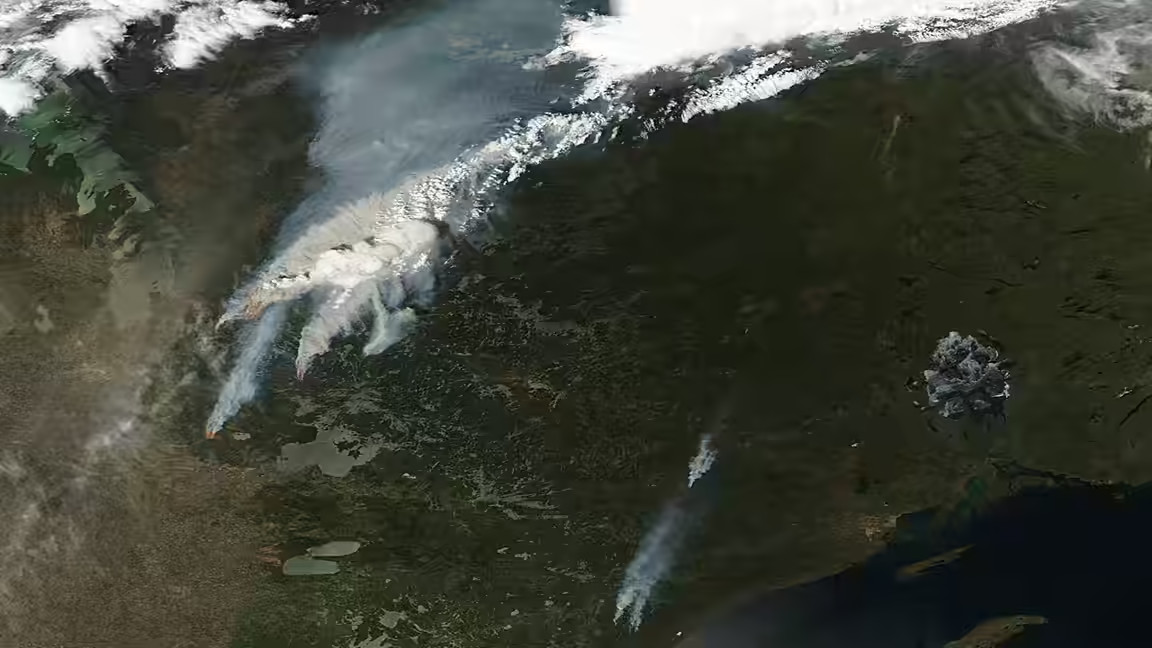
Wildfires affecting northern Minnesota and territory across the Canadian border had burned about 77,000 acres as of July 17, 2026, according to an update attributed to the U.S. Forest Service. Officials reported 19 active fires, including three in the Boundary Waters, as hundreds of personnel worked amid smoke and unusually dry conditions.
The active fires collectively covered nearly 44,300 acres and remained mostly uncontained, the Forest Service said. Officials expected that footprint to increase. More than 500 firefighters and support personnel were involved, including members of over a dozen departments from Minnesota and other states.
Rain brought only a limited interruption. Northern Minnesota received between 0.5 and 1 inch on the morning covered by the update, but incident meteorologist Phil Manuel of the National Weather Service described its effect as temporary. He said the rainfall briefly changed the immediate conditions by clearing smoke and coinciding with a wind shift, rather than ending the underlying fire danger.
The same storm produced approximately 13,000 lightning strikes, creating concern about additional ignition points. Manuel said some strikes probably reached dead or fallen material that could smolder without initially becoming large enough to detect. That possibility meant the number of fires could rise after a delay, even though rain had fallen.
Long-running heat and dryness shape the response
Officials connected the severity of the fires to both recent weather and conditions extending back to the previous year, including extreme heat and low snow and rainfall totals. Jason Loomis, an incident commander with the National Incident Management Organization, characterized the circumstances as unprecedented for Minnesota. He contrasted them with conditions more commonly associated with Arizona and other dry, arid environments.
Manuel said the fires were likely to remain a problem throughout the summer unless the region received multiple prolonged periods of rain or snowfall began. His assessment underscored the difference between a brief storm that slows visible fire activity and sustained precipitation capable of changing the broader dry conditions described by officials.
Smoke also continued to interfere with aerial firefighting, according to the Forest Service. That limitation affected operations while ground and support crews confronted fires spread across a large area.
Fire crews estimated that between 6,000 and 10,000 people had evacuated from the Boundary Waters. Other residents and visitors were packing belongings in case authorities issued further evacuation orders. The Lutsen Resort Area had entered “Ready” status, indicating that people there should prepare to leave if conditions required an evacuation. The status did not itself constitute an order to depart, but placed the area within the broader readiness measures accompanying the ongoing fire response.