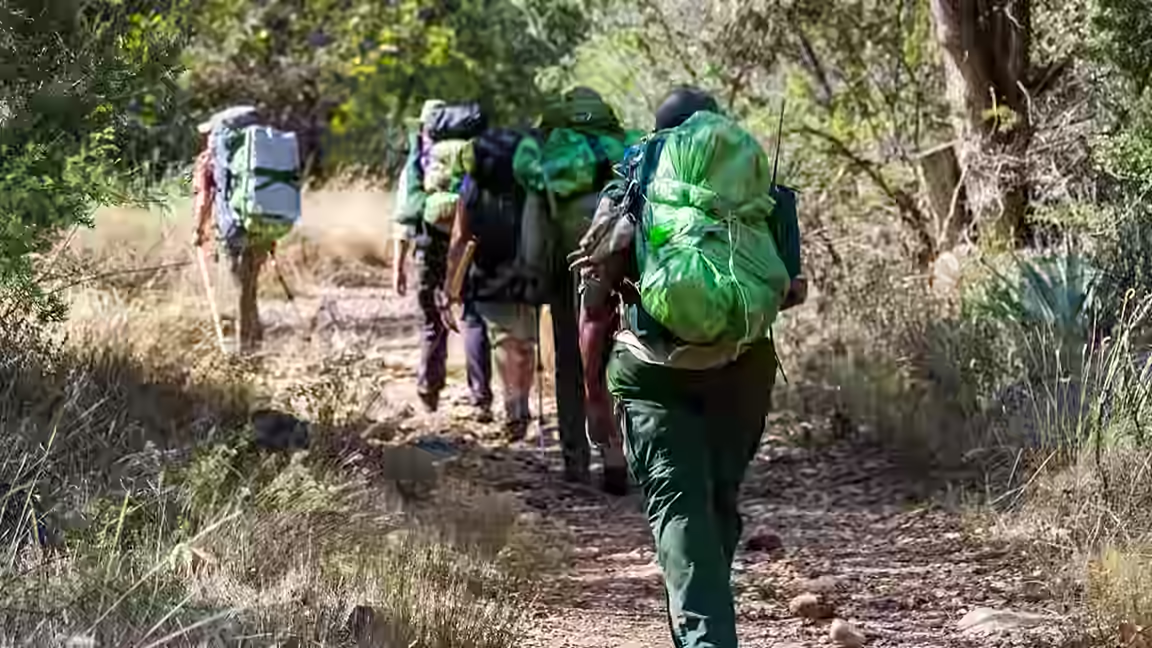
The six members of the Connecticut Interstate Fire Crew joined personnel from Maine and New Hampshire in an interagency unit organized through the Northeastern Forest Fire Protection Compact. The arrangement allows jurisdictions to pool trained crews when fires exceed the resources readily available in one area.
This was Connecticut's second crew assignment of the 2026 wildfire season. A separate deployment of 19 Connecticut crew members and one firefighter from Rhode Island was already assisting at the Salmon wildfire in Oregon. The simultaneous assignments illustrated the wider demand for qualified personnel in both the United States and Canada.
The Quebec-bound team included full-time DEEP staff and trained call-when-needed firefighters. Members volunteer for assignments and must meet national wildland standards. Connecticut requires a formal training program, an annual physical-capacity test and refresher instruction covering suppression tactics, safety and incident command. Many people on the state's roster also have ties to local fire departments.
Connecticut residents had recently experienced smoky skies and poor air quality, but DEEP said that smoke came from fires in Ontario and Minnesota, not from the Quebec locations where the crew was heading. Acting Commissioner Emma Cimino nevertheless pointed to the episode as evidence that wildfire impacts cross borders. Reducing the pressure on Canada's firefighting system could help limit larger and longer-burning incidents across the region.
The deployment also operates within a reciprocal assistance program supported by the US Forest Service. Connecticut makes trained personnel available to other states and countries, while retaining the ability to request outside help during its own fire emergencies or natural disasters. The Forest Service reimburses the state for agency expenses directly associated with such deployments.
The mission was a personnel contribution rather than a response to fires causing Connecticut's current smoke. Its immediate purpose was to reinforce crews around Val-d'Or, while its broader significance lay in the regional system for moving specialized firefighters to places where demand was highest.