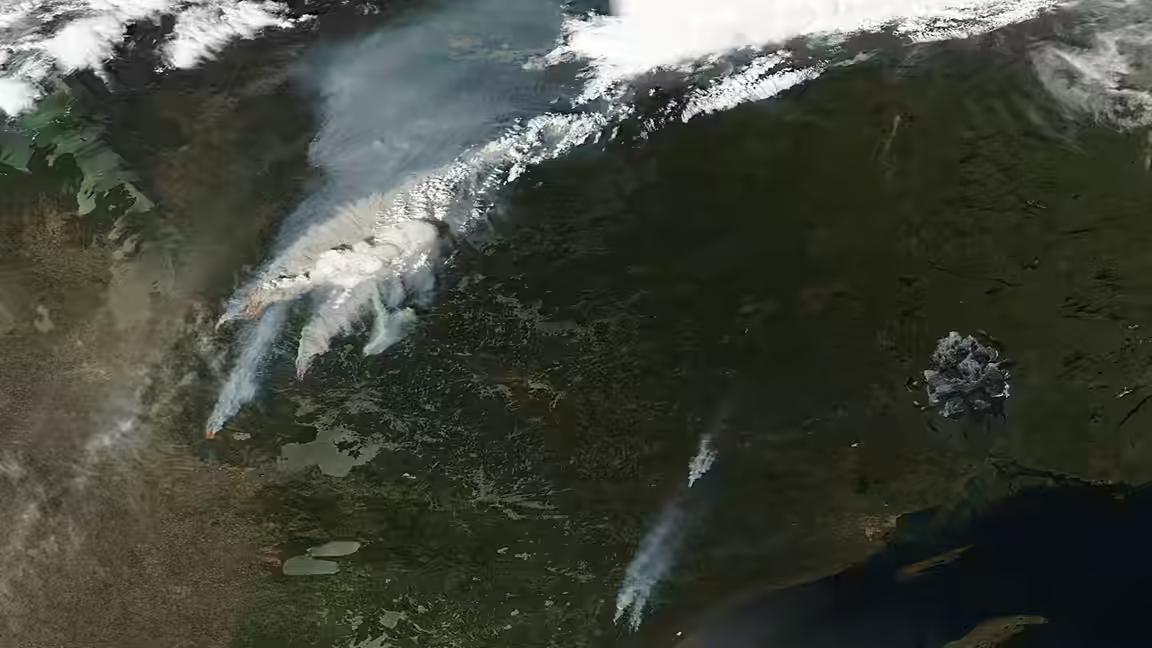
More than 900 wildfires were burning across Canada on July 17, 2026, as new outbreaks prompted evacuations and destroyed buildings, according to CTV News. Fires were reported across the country, extending from the Atlantic provinces to British Columbia.
The nationwide total underscored the geographic reach of the fire activity, although CTV reported that it remained below the level recorded during Canada’s worst fire season. the available excerpt does not identify that earlier season, provide a numerical comparison or state how many of the active fires were under control.
A separate report carried by BNN Bloomberg described the total as nearly 900 and said smoke was spreading over much of North America. That account highlighted evacuations in Northern Ontario. The small difference in phrasing between “more than 900” and “nearly 900” reflects the figures as presented by the two available reports; neither excerpt provides a fixed observation time or a detailed national tally.
Fire activity spans the country
Together, the accounts depict simultaneous wildfire activity across a broad Canadian corridor rather than an emergency confined to one province. CTV’s description places fires from eastern Canada through British Columbia, while the BNN Bloomberg item connects the Canadian outbreaks to smoke conditions over a wider portion of the continent.
Evacuations were among the immediate consequences identified in both reports. CTV also referred to buildings being destroyed, though the available material does not give a count, identify the affected communities or describe the structures. BNN Bloomberg specifically located evacuation pressure in Northern Ontario but did not state how many people or communities were involved.
The evidence does not provide causes for any of the fires, identify ignition dates or distinguish between human-caused and naturally started outbreaks. It also does not list firefighting resources, containment percentages, injuries or fatalities. No forecast is available for fire growth, smoke movement or the duration of evacuation orders.
The comparison with Canada’s worst season supplies context for the scale without establishing that the 2026 activity had reached a record. CTV explicitly reported that the total remained lower than the country’s highest seasonal level. At the same time, the number of active blazes, their coast-to-coast distribution and the reported evacuations show that the ongoing situation was already affecting multiple regions.
Smoke added a cross-border dimension to the event because its spread was described in continental rather than solely Canadian terms. The available BNN Bloomberg excerpt does not identify particular cities, provinces outside Northern Ontario, US states or measured air-quality levels. Its supported claim is limited to smoke extending across much of North America.
As historical context, the nationwide wildfire count and associated evacuation reports were recorded on July 17, 2026. Based on the available evidence, the principal verified elements are the presence of roughly 900 or more active fires, their distribution from the Atlantic provinces to British Columbia, evacuations including in Northern Ontario, reports of destroyed buildings, and widespread smoke. More detailed assessments of losses, affected populations and individual fire behaviour are not contained in the cited accounts.