Benjamin Netanyahu has said Israel will keep its forces in the security buffer zone in Lebanon for as long as necessary, even after the announcement of a ceasefire agreement between the United States and Iran. The comments make clear that Israel does not see the emerging diplomatic deal as a reason to pull back from territory it controls. Instead, Netanyahu framed the occupation as a matter of national defence that will continue across multiple fronts.
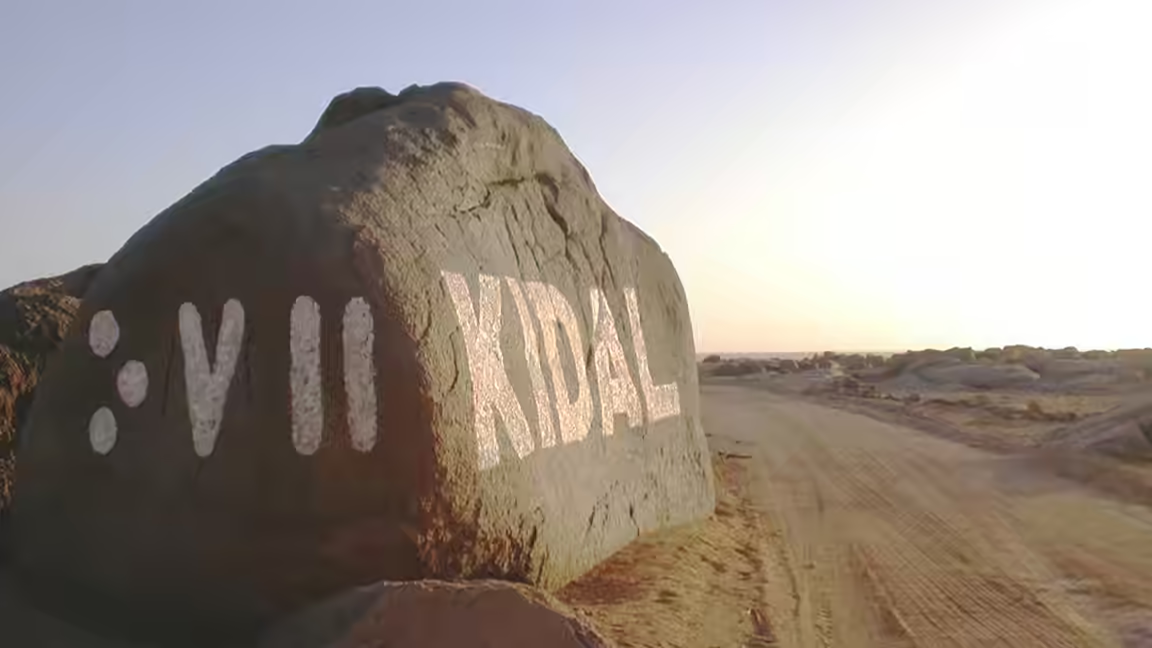
The territory in question is substantial. Al Jazeera reported that Israel occupies around 570 square kilometres in Lebanon, and that its occupation of land in Syria will also continue. Netanyahu also said Israel would not withdraw from Gaza, where it occupies around 1,000 square kilometres. That approach reflects a broader security doctrine in which Israeli troops remain in place well beyond the immediate battlefield, particularly in zones the government describes as necessary to protect border communities.
The background is the long-running conflict with Hezbollah. Israel has been fighting the Iran-backed armed group since October 2023, launched cross-border raids in 2024 and later escalated into a full-scale invasion of Lebanon. More than 3,000 people have been killed in that conflict, and Israeli troops are now stationed beyond the Litani River, which had been treated as the official end point of Israel's self-declared security zone. Netanyahu's latest remarks suggest no immediate willingness to revise that posture.
The timing is sensitive because the US-Iran memorandum of understanding is meant to narrow hostilities, not widen them. According to the report, the deal was due to be signed on Friday, and its unconfirmed details appeared to include Lebanon. But a recent Israeli strike on Beirut's suburbs, which killed three people, was seen as crossing a line and reportedly angered Donald Trump, who feared it could derail progress. The ceasefire therefore remains fragile, with one side trying to formalise calm while another insists on keeping troops in place.
Netanyahu defended the stance by saying he does not always see eye to eye with Trump and by stressing that he is responsible first for Israel's security interests. He also said Israel's war with Iran was an overall win and repeated that Iran would never have nuclear weapons. Defence Minister Israel Katz backed him up by saying the army should stay in the security zones in Lebanon, Syria and Gaza without a time limit. That leaves little doubt that the government sees withdrawal and de-escalation as separate questions.
For the region, the implication is that any ceasefire involving the United States and Iran does not automatically freeze the Lebanese or Syrian fronts. Israel's leadership is signalling that it will continue to act independently, even if that complicates broader diplomacy. That makes the agreement more of a partial truce than a clean break from war, and it means the latest announcement may stiffen pressure rather than ease it.