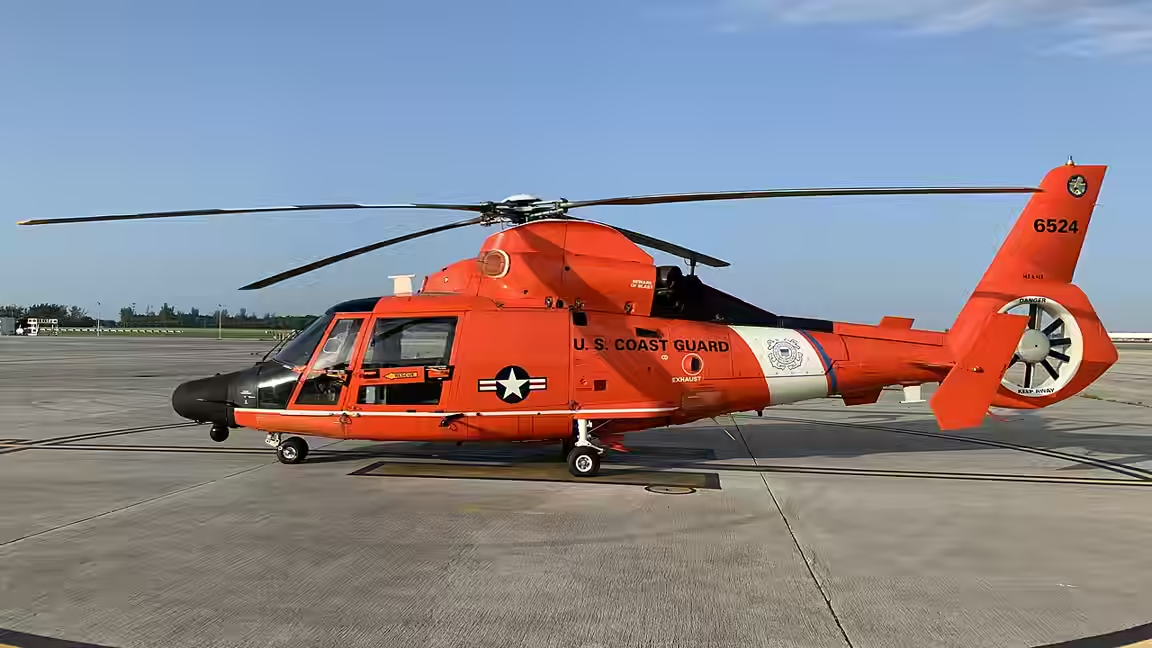
A Qatar Emiri Air Force helicopter crashed into the sea off Qatar during a training exercise, and all seven occupants were killed, according to the supplied report. The verified facts point to a fatal military aviation accident that occurred during a non-combat activity rather than an operational strike or battlefield mission. Even in the absence of further technical detail, the event is significant because it involved a military aircraft, occurred at sea, and resulted in the loss of everyone aboard.
The most important confirmed element is the setting of the crash: it happened during a training exercise. That detail frames the incident as an accident associated with preparedness or routine military flying rather than a hostile engagement in the evidence provided. Training flights are a basic component of air force activity, but they also carry risk because they involve aircraft maneuvering, crew coordination, and operational procedures under demanding conditions. In this case, the report does not specify the type of drill being conducted or the stage of the exercise when the helicopter went down.
The helicopter belonged to the Qatar Emiri Air Force and crashed into the sea off Qatar. The maritime location immediately distinguishes the accident from one occurring over land, where wreckage access, emergency response, and recovery logistics may be different. A sea crash can complicate rescue and investigation efforts, depending on water conditions, distance from shore, and how quickly responders can reach the site. The supplied evidence, however, does not provide information about the exact location, the condition of the sea, or the sequence of recovery operations.
What is fully established from the excerpt is the death toll: all seven occupants died in the accident. The wording does not identify the victims by role, rank, or nationality, nor does it say whether all seven were crew members or whether some were trainees or other personnel. Without that level of detail, the most accurate description remains that seven people were on board and none survived. That alone makes the event a major loss for the unit involved and a serious aviation incident for the armed forces.
The limited evidence also means there is no verified basis here for claims about the cause of the crash. Mechanical failure, pilot error, weather, procedural breakdown, or another factor are all possibilities in military aviation accidents generally, but none of them can be attached to this case from the supplied excerpt alone. Likewise, there is no support in the evidence for suggestions of sabotage, collision, or hostile action. The excerpt supports only that a helicopter crashed during training and that the outcome was fatal for all on board.
That narrow factual frame is still important. Military training missions are designed to improve readiness, but when a fatal crash occurs during such an exercise, attention typically turns to aircraft safety, flight protocols, and the handling of military aviation risk. The report excerpt does not describe any official investigation, announcement of mourning measures, or suspension of similar flights. As a result, the story must remain focused on the immediate event rather than the institutional response that may have followed.
The sea crash also emphasizes the unforgiving nature of rotary-wing operations. Helicopters are often used for transport, search and rescue, training, and maritime tasks, but they operate in environments where failures can become catastrophic very quickly. In this case, the evidence offers no indication that any emergency landing succeeded or that any occupants were recovered alive. The outcome, as reported, was total loss of life.
Based strictly on the supplied evidence, the clearest account is that a Qatar Emiri Air Force helicopter went down in the sea off Qatar while conducting a training exercise and that all seven people aboard were killed. No more detailed explanation of cause, crew composition, mission profile, or follow-up measures is supported by the excerpt. The verified story is therefore one of a fatal training-flight accident with complete loss of life aboard a military helicopter.