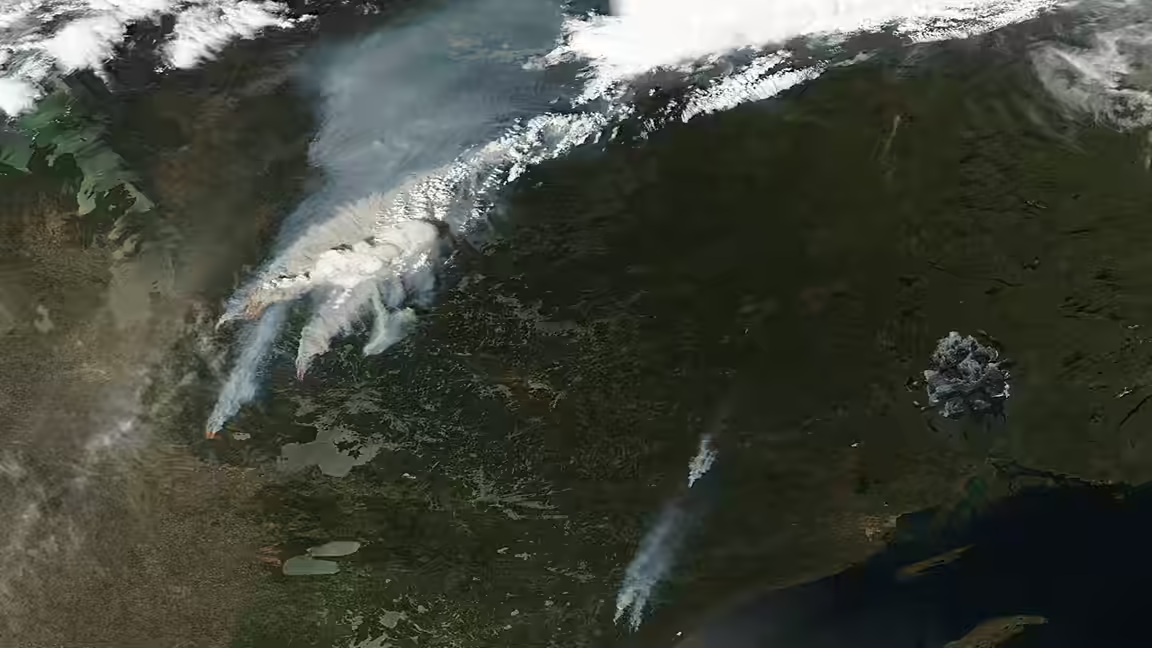
The later casualty count reported by the BBC exceeded an earlier government figure of 15. Disaster agencies said the most dangerous blaze moved through dry forest near the coastal city of Concepción. Across the two affected regions, about 8,500 hectares had burned and roughly 250 homes had been destroyed. Television images showed charred vehicles in city streets.
Most evacuations were concentrated in Penco and Lirquén, neighbouring communities north of Concepción with a combined population of about 60,000. The scale of the movement meant that a large share of both cities had been told to leave. Authorities said the emergency declaration allowed the armed forces to support the response, and Boric said all state resources were available.
Firefighters faced conditions favouring rapid spread. Gusting winds pushed flames through vegetation dried by high summer temperatures, while much of Chile was under heat alerts. Forecasts indicated temperatures could reach 38 degrees Celsius along a broad zone between Santiago and Biobío. Interior Minister Álvaro Elizalde described the situation as complicated, and officials emphasised that the fires had already been burning for two days.
Chile's forestry agency, Conaf, counted 24 active fires on Sunday, with the most threatening concentrated in Ñuble and Biobío, roughly 500 kilometres south of Santiago. The simultaneous incidents required crews to divide aircraft, personnel and other resources across several fronts. The evidence did not establish the ignition source of any individual blaze.
The disaster revived memories of earlier fire seasons in south-central Chile. In February 2024, several fires burning at the same time near Viña del Mar killed 138 people according to the public prosecutor's office and affected about 16,000 residents. Another supplied account described at least 120 deaths in the wider Valparaíso region during that season. The precise historical comparison varies by authority, but both reports underscore the country's repeated exposure to deadly urban-edge fires.
Long-term drought has worsened Chile's vulnerability, while heat and wind can turn separate starts into fast-moving emergencies. On this occasion, officials grounded their immediate response in evacuation and military-supported disaster powers rather than offering a definitive cause. The catastrophe designation signalled that the threat extended beyond forest loss: dense communities near Concepción, electricity and transport links, and tens of thousands of displaced residents all required protection while crews tried to contain the fire fronts.