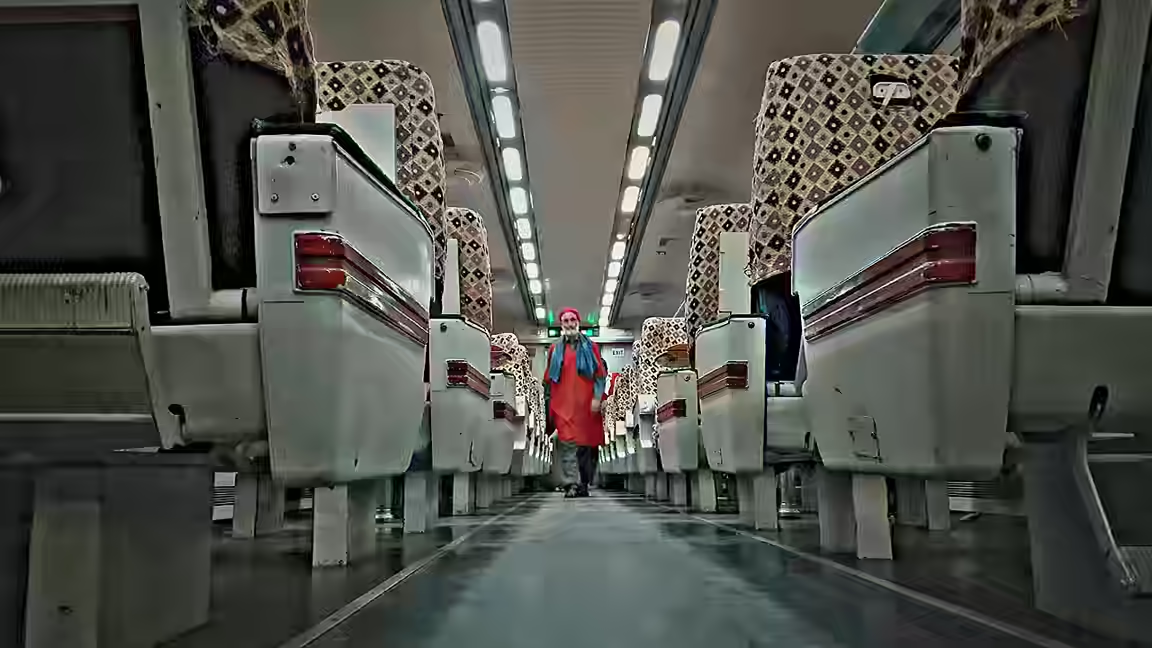
A collision between two trains on the rail line to Machu Picchu killed at least one person and injured dozens on the event date, turning a routine tourist route into an emergency scene in Peru’s Andean highlands.
The crash happened on the single-track line between Ollantaytambo and Machu Picchu, according to the report from Al Jazeera citing rail agency Ferrocarril Transandino. One train was operated by PeruRail and the other belonged to Inca Rail. The deceased was identified by the prosecutor’s office in Cusco as the conductor of one of the trains.
The location of the collision made the response especially difficult. The accident site is in a remote area without direct road access, so medical personnel and ambulances had to be rushed in after the crash. Al Jazeera reported that about 20 people were in relatively serious condition, while social-media images showed the locomotives damaged head-on and injured passengers being treated at the side of the track.
The rail route is an essential access point for one of South America’s most visited destinations. Machu Picchu is a UNESCO World Heritage Site and draws thousands of visitors every day, many of them foreign tourists. Most people reach the site by train and then bus, making the rail corridor more than a local transport line; it is the final link in a high-volume tourism chain.
That is why the collision has wider implications than the immediate casualty count. Any interruption on the route can affect passenger movement, tourism schedules and the ability of emergency crews to reach the scene quickly. In this case, the single-track design appears to have been a central vulnerability, though the report did not give a final cause.
Authorities had not immediately explained how the trains came to collide. The Al Jazeera account said the cause was still unclear, and no official attribution of fault was included in the supplied evidence. That leaves the incident in an early investigative phase, with the first facts centered on the loss of life, the number of injured and the logistical problem of reaching the location.
The scale of the response reflected the seriousness of the crash. A dozen ambulances and medical workers were deployed to the site, according to the report. That kind of emergency operation is difficult on any rail line, but especially in terrain where roads are limited and altitude adds strain to transport and treatment.
For travelers, the event is a reminder that access to major heritage sites can depend on narrow infrastructure. For local authorities, it will likely raise questions about traffic control, scheduling and safety procedures on a route that carries heavy tourism demand. The supplied report does not yet answer those questions, but it makes clear that the accident affected one of Peru’s most recognizable travel corridors.
Machu Picchu’s global profile gives this crash an unusually broad audience, but the human story is immediate and local: a conductor dead, passengers hurt, and responders racing against geography to reach them. Until investigators determine exactly what went wrong, the line between Ollantaytambo and the citadel will remain associated not with arrival, but with collision.