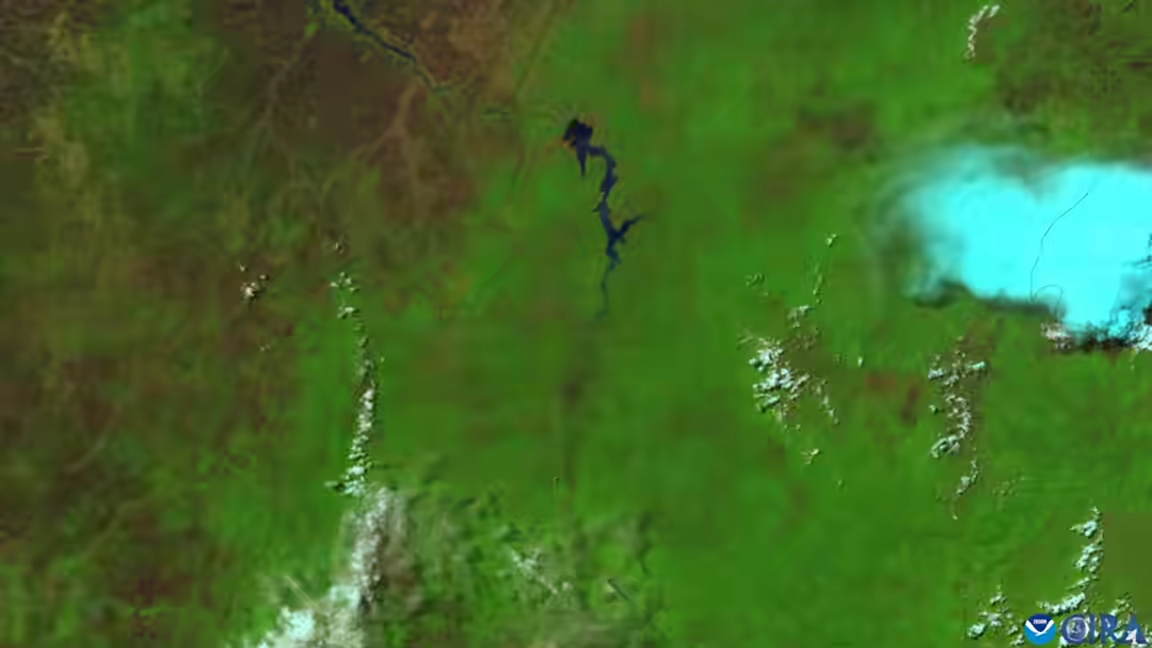
On November 25, 2025, air travel in India was disrupted after the long-dormant Hayli Gubbi volcano in Ethiopia's Afar region erupted for the first time in nearly 12,000 years. The eruption sent ash and smoke high into the atmosphere and pushed a plume across the Red Sea toward Yemen, Oman, Pakistan and northern India.
The Indian response was immediate. Air India canceled 11 flights on Monday and Tuesday so it could carry out precautionary checks on aircraft that had flown over affected areas, after a directive from the aviation regulator. Budget carrier Akasa also canceled scheduled flights to destinations including Jeddah, Kuwait and Abu Dhabi over the same two-day period.
Tracking websites and aviation advisories showed the extent of the spread. Flightradar24 said ash had covered parts of Pakistan and northern India by Tuesday, while the Volcanic Ash Advisory Center said the cloud had crossed Yemen and Oman. The India Meteorological Department said the ash was expected to clear Indian skies by 1400 GMT on Tuesday, giving airlines a short window before normal operations could resume.
Officials in Ethiopia said there were no casualties. A local administrator, Mohammed Seid, said the eruption could still have economic implications for farming communities in the Afar region, while the regional government warned people with asthma and bronchitis to take precautions. Social media and satellite images captured the eruption's force, underscoring how a remote volcanic event can create immediate consequences for aviation far from the source.
The episode also highlighted how interlinked flight networks have become. Ash from a volcano in northeastern Africa did not stay local; it crossed sea lanes, filtered into the Middle East and reached South Asia quickly enough to trigger inspections, rerouting and cancellations. For airlines and regulators, the challenge was less about spectacle than safety, because even thin ash clouds can affect engines, visibility and route planning across wide corridors of international air traffic.
The eruption also put weather and aviation systems under pressure across several countries at once. When ash travels through multiple flight regions, the challenge is not only local visibility but also whether an aircraft has passed through airspace where microscopic volcanic particles may have entered engines or sensors. That is why the checks by Air India and the cancellations by Akasa mattered even though the volcano was far away from India.
For observers in Ethiopia, the event was a reminder that a dormant volcano can still have global consequences. The eruption may have been rare, but the response was routine in one sense: authorities and airlines treated the plume as a flight-safety issue first and a news event second. That approach is what kept the disruption limited to inspections, cancellations and rerouting rather than a wider crisis in the regional network.
The eruption may also keep aviation authorities alert for longer than the cancellation window suggests. Ash clouds can linger in flight planning even after the visible plume has thinned, because route decisions depend on where particles are moving and how high they are concentrated. That is why monitoring across Ethiopia, the Gulf and South Asia will likely continue until the system is sure the air is safe again.