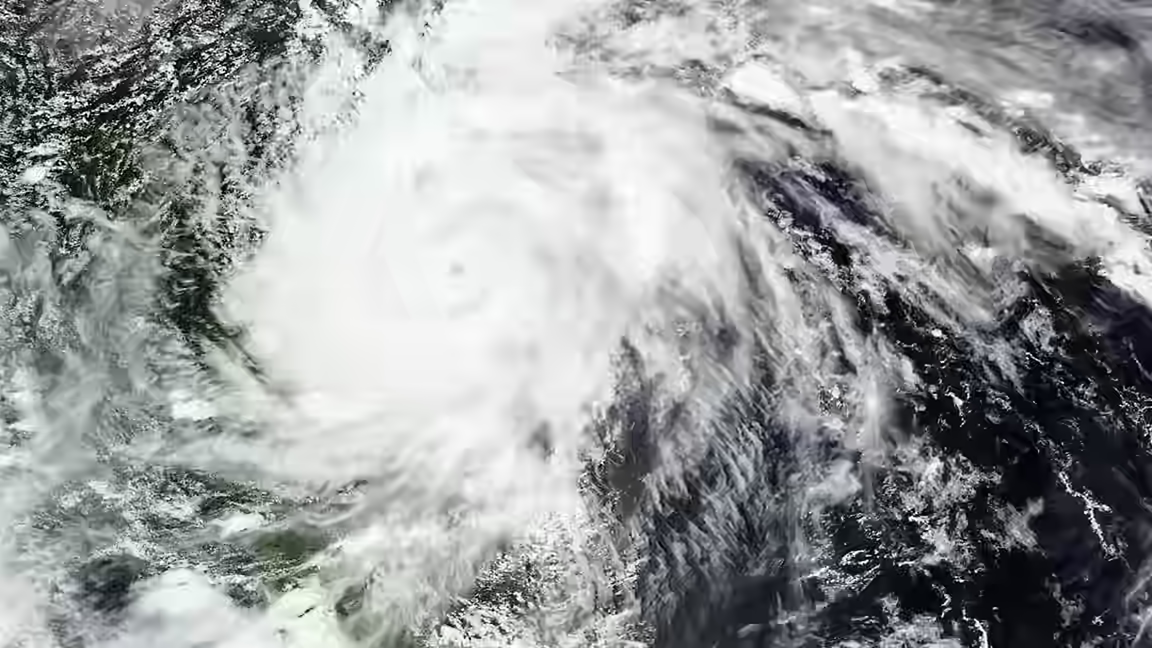
Typhoon Kajiki struck central Vietnam after authorities ordered nearly 600,000 people to leave vulnerable areas and closed schools, airports and some rail services. The storm came ashore in Ha Tinh province on Monday afternoon, bringing powerful winds, heavy rain and coastal flooding.
Vietnam's meteorological centre reported winds of 118 to 133 kilometres per hour at landfall, according to the BBC. AP, citing the national weather agency, gave a maximum sustained wind speed of 117km/h. The small difference reflected separate reported measurements, but both accounts described a strong storm capable of damaging buildings and infrastructure.
Ahead of Kajiki's arrival, evacuation orders covered residents in Thanh Hoa, Quang Tri, Hue and Da Nang. AP reported that more than 152,000 households were in high-risk areas and that more than 16,500 soldiers and 107,000 paramilitary personnel were helping with evacuations or waiting to support search-and-rescue work. The preparations were made as forecasters warned that Kajiki could become Vietnam's strongest storm of the year.
Two airports in central Vietnam suspended flights, while some train services were also halted. AP reported the airports in Thanh Hoa and Quang Tri remained closed on Tuesday after Monday's suspensions. The broad disruption accompanied school closures described by the BBC, although the supplied reports did not identify every school or province affected.
The storm brought down trees, tore roofs from houses and flooded roads. In Nghe An province, a resident told Reuters, in an account carried by the BBC, that waves appeared to reach two metres and water had spread across nearby roads. High tides contributed to coastal flooding in Nghe An and Ha Tinh, according to AP, while electricity supplies in Nghe An were disrupted from Monday night.
The human toll became clearer after the event date. On Tuesday, August 26, state broadcaster VTV reported at least four deaths and 13 injuries, according to AP. The dead included a 90-year-old man whose home collapsed during the rain and another man who was electrocuted while preparing his property for the storm. Thousands of houses in central Vietnam were reported damaged. Those figures were a next-day update, not a casualty count established at landfall.
Kajiki weakened after moving inland, but forecasters continued to warn of dangerous rainfall. Vietnam's meteorological centre said winds remained strong even as the storm's intensity declined. Flash-flood and landslide alerts covered 400 communes in six provinces, and the storm's remnants moved west over Laos. Heavy rain was also forecast in Thailand, where people in low-lying areas and near waterways were advised to remain alert.
Before reaching Vietnam, Kajiki passed close to the southern Chinese coast and affected Hainan. The BBC reported damage to roads, water systems and other infrastructure in China. The supplied reports did not provide a regional casualty figure associated with that earlier phase.
The storm arrived less than a year after Typhoon Yagi caused widespread destruction in Vietnam. The BBC reported that Yagi killed 300 people in the country, caused billions in damage and left about 1.5 million people without electricity. That recent disaster formed part of the context for the scale of Kajiki's evacuation and emergency preparations.
Scientists cited by both outlets said warmer seas can affect tropical cyclones, including where they form, how rapidly they strengthen and how much rain they carry. The BBC cautioned that attributing the behaviour of an individual storm to climate change is complex. Kajiki's immediate consequences were nevertheless clear: damaged homes, disrupted transport and power, flooded communities and a large continuing response across central Vietnam.