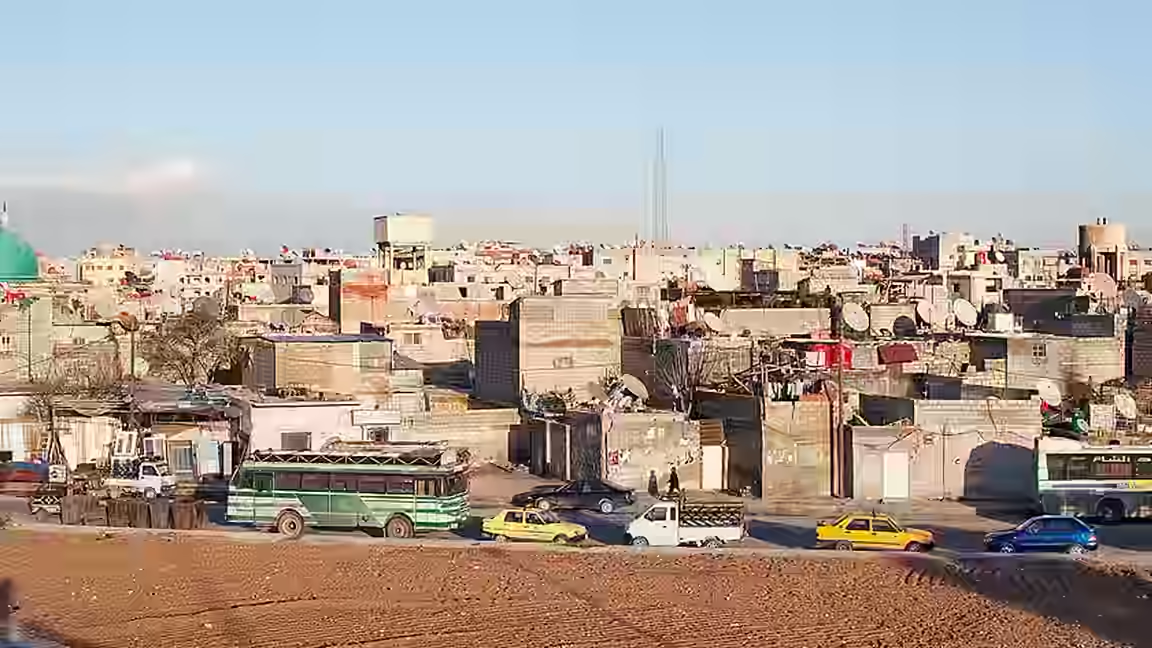
Gaza's civil defence agency said on August 6, 2025, that 20 people were killed when an aid truck overturned near the Nuseirat refugee camp in the central Gaza Strip. The incident happened while hundreds of civilians were waiting for aid, turning a logistics problem into another mass-casualty event in a territory already scarred by hunger, crowding and repeated conflict.
According to the Guardian's live coverage, the agency's spokesman Mahmud Bassal said the truck overturned around midnight and left dozens injured. The scene described in the report is grim: a vehicle carrying humanitarian supplies came apart under pressure from desperate crowds, and the people waiting for food and basic goods paid the price. Hamas accused Israel of forcing truck drivers to take unsafe routes to reach distribution centers, a claim that reflects the depth of the blame game surrounding aid access in Gaza.
The broader backdrop is one of severe scarcity. The live blog noted reports that drivers delivering aid inside Gaza had become increasingly vulnerable as hunger deepened and armed gangs filled a power vacuum. In that environment, aid trucks can become targets of frantic crowds or armed theft. The result is a distribution system that can collapse under its own weight, even before a convoy reaches a formal handover point. That is what makes the Nuseirat incident more than a single road accident.
The report also linked the fatal crash to the larger political crisis surrounding aid. Israeli officials and the United Nations were already disputing proposals for expanding military operations in Gaza, while other parts of the live blog described separate attacks on aid convoys and repeated warnings about famine-like conditions. Against that backdrop, an overturned truck is not just a traffic accident. It is part of a humanitarian system that has become nearly impossible to move safely through a war zone.
The Guardian's account did not offer a full casualty breakdown beyond the 20 deaths and dozens of injuries cited by civil defence officials, but the scale was already severe enough to stand out. A truck carrying humanitarian aid is supposed to be a sign that food and supplies are getting through. In Nuseirat, it became another reminder that access, safety and distribution are all under strain at once. The death toll makes clear how fragile those final miles of aid delivery have become in Gaza.
The live coverage also made clear that the aid system in Gaza is under extraordinary strain. When a truck carrying food and supplies can be surrounded by civilians waiting for help, the distinction between transport and crowd control disappears. That is why the accident resonated so strongly: it was not simply a vehicle tipping over, but a sign that the normal rules of distribution have broken down and that people are being pushed into dangerous competition for scarce relief.
The fact that the agency counted dozens injured alongside the dead suggests the crowd pressure around the truck was intense. That matters because aid in Gaza is now moving through a landscape where every convoy has to pass through hunger, anger and mistrust. The accident is therefore as much about the conditions around the truck as about the truck itself.