The vessel departed Ketapang port in Banyuwangi late on July 2 for the approximately five-kilometre journey to Gilimanuk on Bali. It sank around half an hour after leaving. Among the six people whose bodies were recovered by the following day were a three-year-old boy and his mother. Authorities planned to return the victims to their families in Banyuwangi.
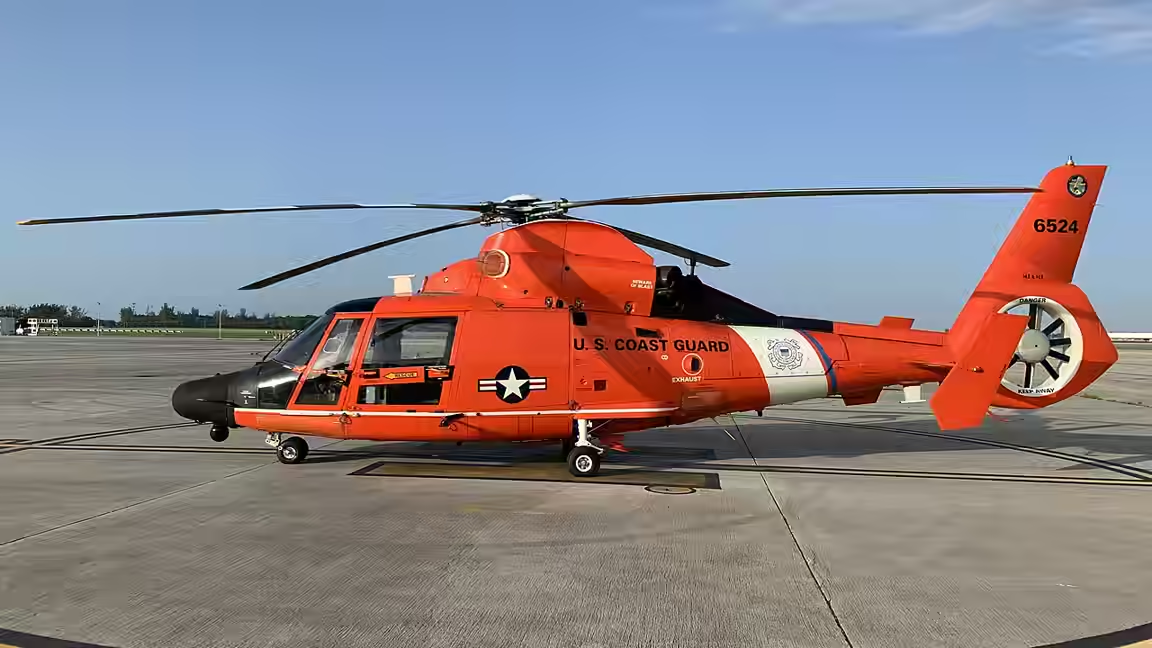
A helicopter and 15 boats joined the search, supported by fishermen and people working from shore. Currents complicated decisions about where to look. Teams initially concentrated north of the shipping lane overnight, but the current shifted and several victims were found farther south. Officials said the ferry was fully submerged, raising the possibility that people remained inside, though the immediate priority was searching the water’s surface.
Conditions were difficult during the first hours of the response. Darkness and waves reaching two metres hampered rescuers overnight. Weather improved the next morning before waves increased to as much as 2.5 metres, accompanied by strong winds and currents. Several survivors were unconscious when recovered after spending hours in choppy water. They were treated at Jembrana Regional Hospital on Bali and at the port office in Gilimanuk.
The cause of the sinking was under investigation. Survivors told rescuers that water may have been entering the engine room. The ferry was transporting 22 vehicles, including 14 trucks. A port officer saw the vessel go down, and rescuers said radio contact was not established at first; other vessels operated by the same company later reached it when it was already listing.
One survivor, 64-year-old Supardi, said he intended to jump as the ferry tilted but was pulled under as it rapidly sank. He made his way back to the surface and joined three others using life jackets while they waited for help.
The disaster prompted an urgent search across the Bali Strait and a parallel effort to establish why a routine, brief inter-island voyage ended so quickly. Families gathered at ports seeking information while rescuers balanced the possibility of people trapped in the wreck with the need to locate anyone still drifting in the surrounding waters.
The changing currents widened the area teams had to cover and meant the overnight search pattern could not simply be repeated the next day.