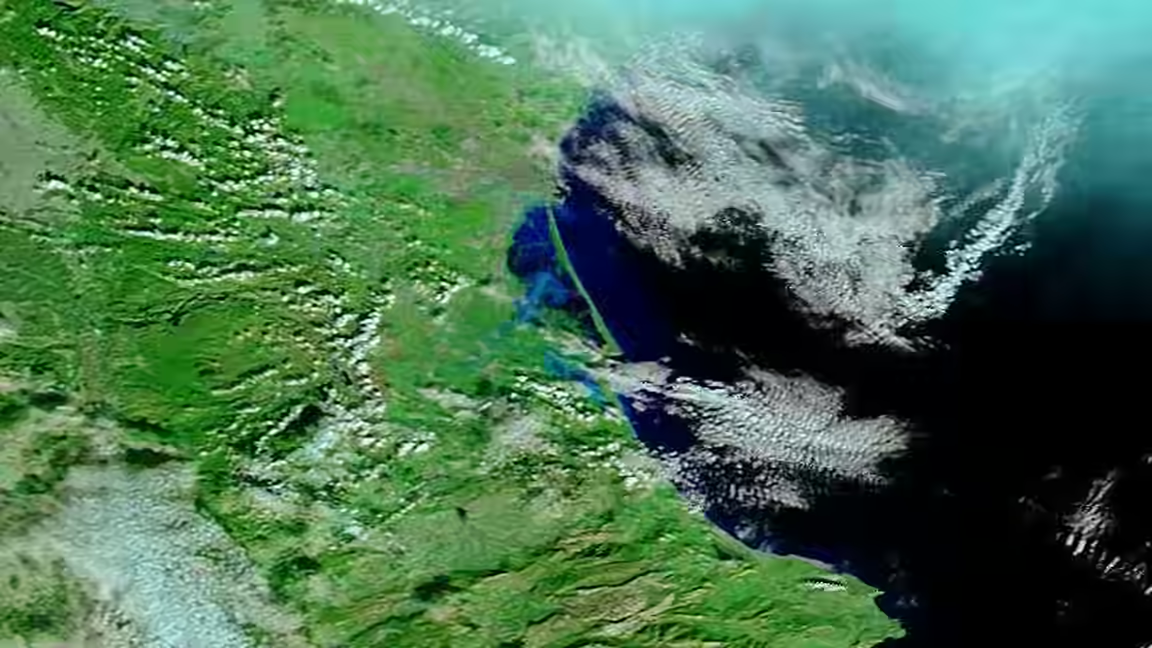
Heavy flooding has severely impacted China’s Guizhou province, with state media reporting that exceptionally large deluges swept through Rongjiang County starting Tuesday. According to reports from the local flood control headquarters, the disaster has claimed at least six lives in the county, while state news agencies and broader reports indicate that the total death toll across various provinces, including Henan and Hubei, has reached at least nine individuals [5806, 5807].
In Rongjiang County, the intensity of the flooding necessitated the activation of the highest-level emergency response. Authorities successfully evacuated approximately 80,900 people to temporary shelters as rising waters inundated housing complexes, shopping malls, and city streets [5807]. The scale of the deluge was such that a local football field was reported submerged under three meters of water, and some residents were forced to seek refuge on the upper floors of their homes before being rescued [5807].
Infrastructure damage in the region has been significant, leading to widespread communication blackouts and traffic obstructions that hindered initial recovery efforts. While water levels in the affected areas of Rongjiang have since retreated below warning thresholds, the focus has shifted toward clearing debris and thick mud from business establishments and public buildings to facilitate reconstruction [5807].
Beyond Guizhou, China continues to face a broader pattern of extreme weather. Meteorological authorities have issued flash flood warnings for Inner Mongolia, while a tropical depression made landfall in the island province of Hainan on Thursday. This storm system is expected to move toward Guangdong province, placing further pressure on flood defenses in southern China [5806, 5807].
Observers note that while China experiences seasonal flooding, the severity of recent events has been exacerbated by rapid urban development. State media coverage has highlighted the dramatic nature of the floods, even as official information remains tightly controlled. The current situation follows a history of public scrutiny regarding government response times and urban design, particularly following catastrophic flooding events in previous years that resulted in significant loss of life [5806].
As the region grapples with the aftermath, emergency teams remain engaged in the investigation of trapped individuals and ongoing recovery operations. The combination of intense summer rainfall and incoming storm systems continues to pose a persistent challenge for disaster management authorities across central and southern provinces [5806, 5807].