Asian markets fell sharply after Donald Trump’s new tariff plan sent investors back into a global risk-off move, with losses spreading from Shanghai to Tokyo, Hong Kong, Sydney and beyond.
The BBC reported that the Shanghai Composite dropped more than 8% at one point, Hong Kong’s Hang Seng sank more than 13%, and Japan’s Nikkei 225 closed down 7.8%. Australia’s ASX 200 fell 4.2%, while South Korea’s Kospi finished 5.6% lower. Taiwan’s benchmark lost 9.7%, its biggest drop on record. The report described the session as a “bloodbath” in parts of the region.
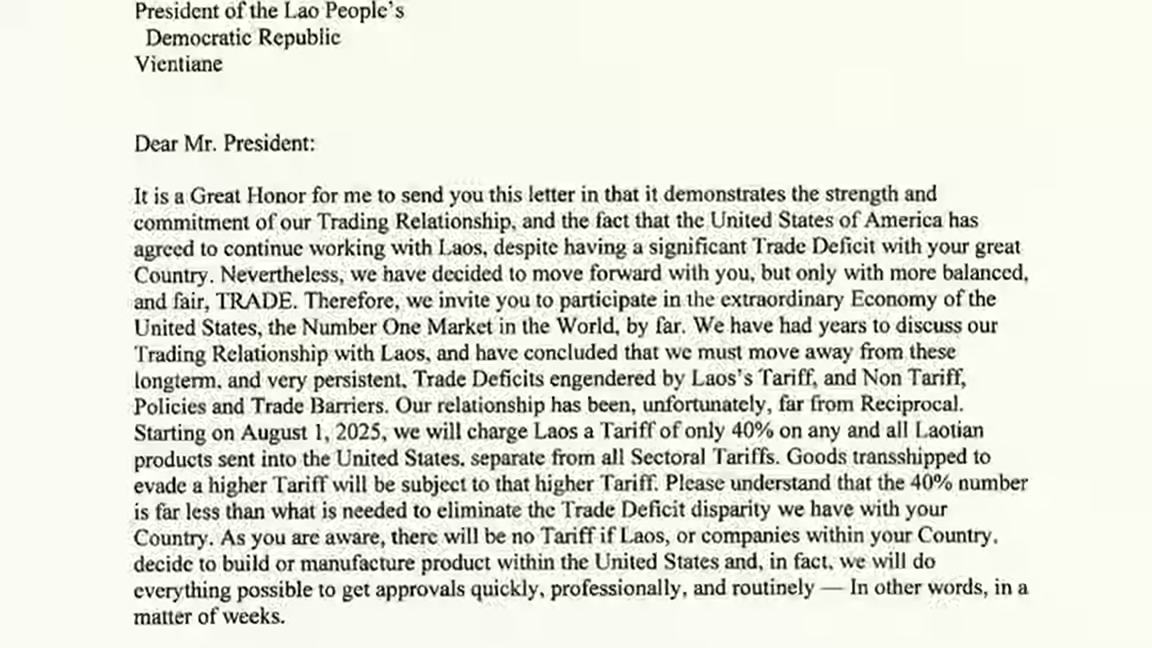
The market reaction followed Trump’s announcement of tariffs ranging from 10% to 46% on most countries. According to the BBC, the new duties hit export-oriented economies especially hard because many Asian manufacturers rely heavily on the U.S. market for goods ranging from clothes to cars. Countries named in the report included Japan and South Korea, which face 26% tariffs, Vietnam at 46%, Cambodia at 49%, Thailand at 36% and China at a total of 54%.
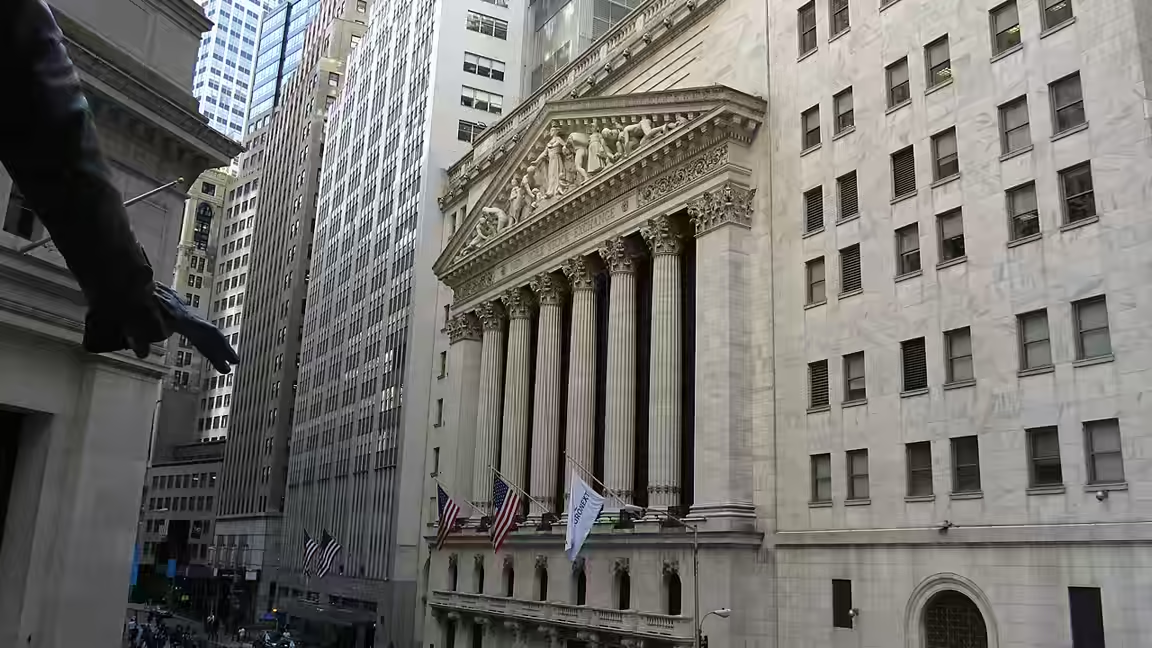
The fallout was not limited to Asia. European markets also fell in early trading, with banks and defence companies among the hardest hit. The BBC report said the FTSE 100 in the UK plunged almost 5%, its steepest fall in five years, while German and French exchanges recorded similar declines. U.S. futures pointed to another rough Wall Street session.
The tariff shock has already fed through to expectations about growth and recession risk. The report said Goldman Sachs raised its estimated chance of a U.S. recession over the next 12 months to 45%, while JPMorgan put the odds of a U.S. and global downturn at 60%. Traders and economists are weighing not just the direct cost of higher import taxes but also the impact on inflation, supply chains and corporate planning.
The BBC also noted that several economies are especially exposed because they export heavily to the U.S. and depend on that trade for growth. That includes manufacturers in Vietnam and Bangladesh, where major American brands source goods. The broader concern is that tariffs set off a cycle in which each new barrier encourages retaliation, amplifying the damage.
The selling wave underscores how quickly tariff announcements can move global assets. In this case, the reaction came not only from the policy itself but also from the size of the rates and the breadth of countries affected. Investors appear to be pricing in a prolonged period of uncertainty rather than a short-lived dispute.
For now, the evidence shows a market rout driven by fear of slower growth and higher prices. Whether the White House follows through, or whether negotiations soften the final outcome, will determine how long the sell-off lasts.