# Los Angeles Wildfires Grow Into a Regional Disaster as Death Toll, Losses and Evacuations Mount
*Event date: 2025-01-12*
By NeoTechNews Desk
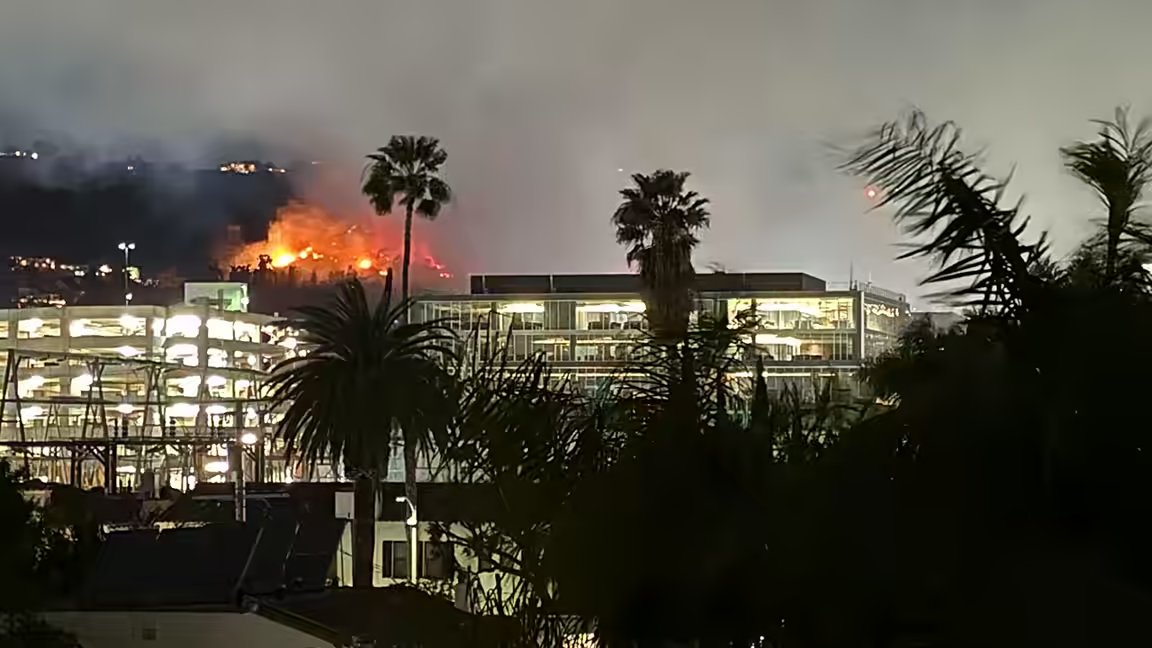
By January 12, 2025, the wildfire emergency in Los Angeles County had already become a sprawling regional disaster, with multiple large fires burning across the county, fatalities rising and evacuation orders still affecting huge numbers of residents. The supplied reporting describes a crisis driven by powerful Santa Ana winds and anchored by the Palisades and Eaton fires, which together consumed tens of thousands of acres while smaller but still dangerous blazes broke out elsewhere in the region.
The scale outlined in the packet was severe. More than 40,000 acres had burned after nine days of fire activity, at least 25 people had been killed and more than 12,000 homes and other structures had been destroyed. Hundreds of thousands of residents remained under evacuation orders or related warnings as fire crews tried to hold lines around the largest incidents. The article supplied in the evidence says the Palisades fire had burned more than 23,000 acres, while the Eaton fire in the Altadena and Pasadena area had spread beyond 14,000 acres.
Wind remained the defining operational challenge. The National Weather Service warned that residents were not yet clear of danger and issued a "particularly dangerous situation" alert, its most severe advance notice for fire weather. Forecast gusts were expected to reach around 65 mph before sunrise into midday on Wednesday, after earlier winds had already topped 70 mph in mountainous areas. Those conditions threatened explosive fire growth even after brief periods of calmer weather had allowed firefighters some progress.
The emergency also exposed the strain that a fast-moving urban-interface fire can place on infrastructure. According to the supplied evidence, more than 330,000 customers lost power at one stage, and fire officials reported depleted water supplies and low water pressure while crews battled the flames. Schools across the Los Angeles Unified School District were closed, affecting roughly 500,000 students, and search-and-rescue operations for missing people were launched as teams sifted debris in burned neighborhoods.
The wildfire map kept changing as new ignitions appeared. Alongside the Palisades and Eaton fires, the Hurst fire burned near San Fernando, the Sunset fire flared in the Hollywood Hills, the Kenneth fire ignited near the Los Angeles-Ventura County line and a smaller Auto fire later broke out in Ventura County. Some of those fires were brought under high containment more quickly than the largest two, but the succession of incidents showed how difficult it was for officials to stabilize the broader region while dangerous wind conditions persisted.
State and federal resources were expanded in response. Gov. Gavin Newsom said more than 7,500 firefighting personnel and nearly 1,200 fire trucks had been deployed across Southern California. President Joe Biden approved a major disaster declaration and later a revised declaration to cover the full cost of debris removal and emergency protective measures. The supplied reporting also notes growing estimates of the economic toll, with potential losses reaching into the hundreds of billions of dollars.
Within the limits of the packet, the January 12 snapshot shows a disaster defined by simultaneous fires, repeated wind-driven flare-up risk, mass displacement and extraordinary damage. The key factual basis for this draft comes from source 2818, which frames the event as a turning point in the scale of the Los Angeles wildfire emergency. Source cited: 2818.