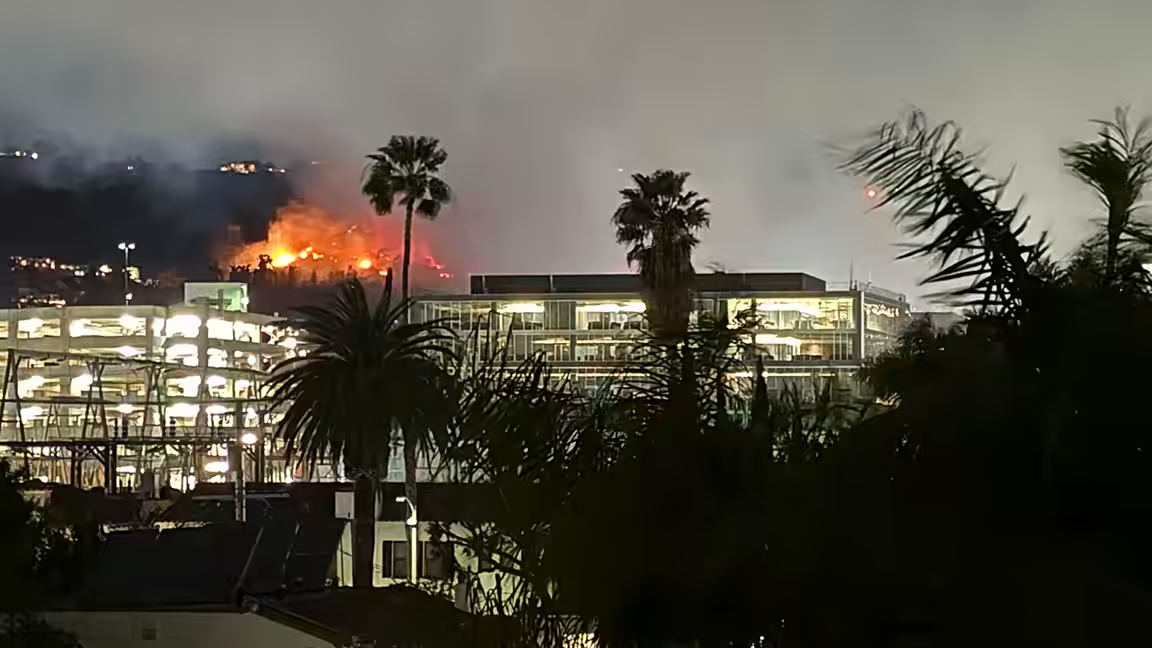
A fast-moving wildfire emergency spread across Los Angeles County on Wednesday as powerful winds drove major fires through Pacific Palisades and Altadena, forcing tens of thousands of people to leave their homes and placing many more under evacuation warnings.
The Palisades Fire began on the morning of 7 January in the coastal hills west of Los Angeles. By that evening it had grown across thousands of acres and reached built-up parts of Pacific Palisades. Hours later, the Eaton Fire ignited near Altadena and Pasadena, while the Hurst Fire developed near the San Fernando Valley. A smaller fire also broke out in the Hollywood Hills.
By 8 January, officials had confirmed deaths in the Eaton Fire and warned that the toll could rise as crews reached damaged neighbourhoods. Thousands of structures stood inside threatened areas, and early assessments showed extensive destruction. The fires remained largely uncontained as gusts pushed flames through dry vegetation and carried embers ahead of the main fire lines.
Evacuation orders covered communities including Pacific Palisades, Malibu, Topanga Canyon, Altadena, Pasadena and Sierra Madre. County officials reported roughly 37,000 residents under orders connected to the Palisades Fire and about 32,500 under orders around the Eaton Fire, with additional residents told to prepare to leave. Roads filled quickly as people attempted to move away from the advancing flames.
The wind was a decisive factor. The National Weather Service had warned that a combination of strong Santa Ana winds and low humidity could produce rapid fire growth if an ignition occurred. Gusts in mountainous areas later reached about 70mph, grounding some aircraft and complicating efforts to establish containment lines. Fire agencies requested mutual aid from neighbouring counties and other western states.
Water infrastructure in Pacific Palisades came under extraordinary pressure. Los Angeles water officials said demand reached about four times normal levels for many hours. Three large storage tanks serving higher elevations were depleted faster than they could refill, reducing pressure at some hydrants even though water remained in the main trunk line. Tankers were then sent to support firefighting crews.
Smoke created a second emergency beyond the flames. Air-quality readings reached hazardous levels in parts of Los Angeles and Pasadena, with health authorities advising residents to avoid outdoor exertion and keep windows and doors closed. Fine particles in wildfire smoke can enter the lungs and bloodstream, creating particular risks for children, older adults, pregnant people and those with heart or respiratory conditions.
The first day also exposed the scale of the logistical challenge. The Altadena sheriff’s station was evacuated after catching fire. More than 300,000 electricity customers lost power across the region at one stage, and school closures disrupted hundreds of thousands of students. Fire officials called for hundreds of additional engines and more than 1,000 personnel as crews arrived from outside the county.
The disaster continued well beyond 8 January. Later assessments found that the Palisades and Eaton fires together burned tens of thousands of acres, destroyed more than 12,000 structures and caused at least 25 deaths. Those eventual totals illustrate how incomplete the picture remained during the first chaotic day, when evacuation, rescue and defence of threatened neighbourhoods took priority over damage accounting.
Investigations into the origins of the major fires followed, alongside scrutiny of emergency preparation, staffing and water capacity. But the immediate cause of the rapid destruction was clear: simultaneous ignitions met exceptionally dry conditions and a windstorm capable of moving fire through dense communities faster than conventional response systems could contain it.
For Los Angeles, 8 January marked the transition from a series of local fires into a regional catastrophe—one that tested evacuation systems, utilities and emergency coordination across one of the largest metropolitan areas in the United States.