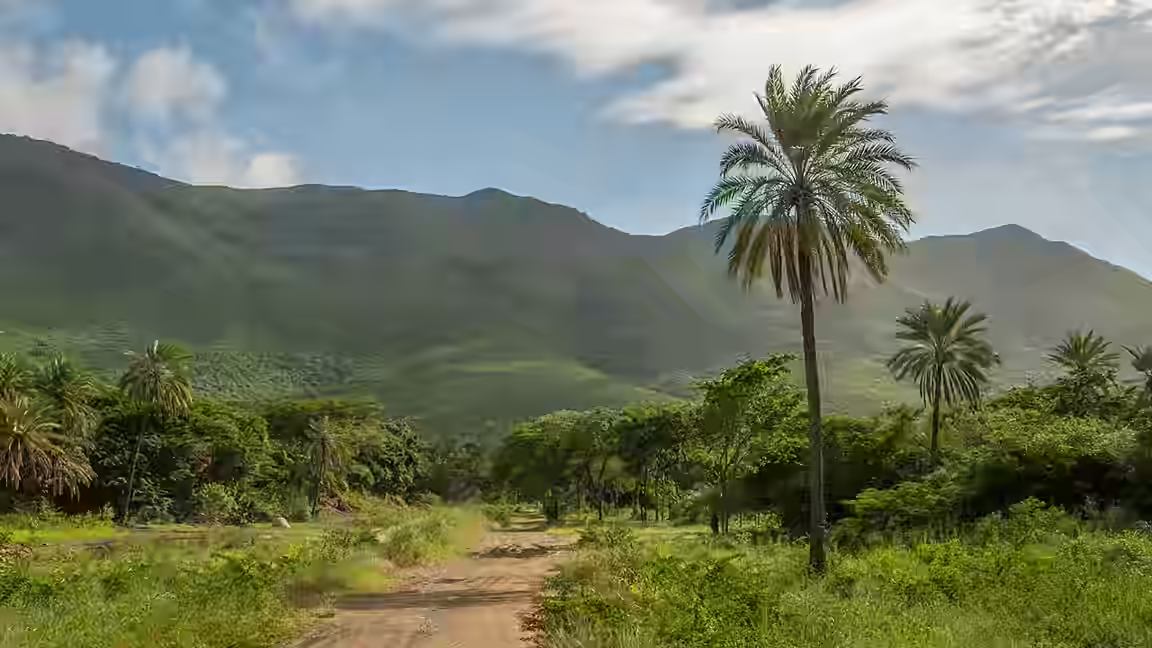
The damage extended across four hilly districts, where mud, rocks and fallen trees swept through villages, destroyed farms and damaged homes. Police officers, soldiers and local rescue personnel joined the search, using excavators, agricultural equipment and hand tools to work through debris.
In Karo district, a landslide hit two houses and a cottage late on Sunday in Semangat Gunung, a resort area. Six bodies were recovered there, while nine injured people escaped. Four people, including two children, remained missing on Monday, according to local disaster-management chief Juspri M. Nadeak.
South Tapanuli district also suffered extensive flooding. Rescuers retrieved two bodies from a river after fast-moving water carried away at least 10 houses. About 150 houses and other buildings were damaged, dozens of people were injured, and more than 130 hectares of farms and plantations were destroyed, local disaster official Puput Mashuri said.
In Deli Serdang, flash floods killed four people. Search workers were still looking for two others who had been swept away. A separate landslide in Harang Julu village, in Padang Lawas district, buried homes and killed four members of one family, including two children. At least three injured residents were rescued from that community.
Together, the district-level reports accounted for the 16 confirmed deaths and six people still unaccounted for on the event date. The figures were an active rescue tally rather than a final assessment, and conditions in affected areas could complicate both searches and damage surveys.
Floods and landslides are recurring hazards during Indonesia's rainy season, typically running from about October through March. The country's steep terrain and settlements near mountains and fertile flood plains leave many communities exposed when prolonged rain saturates slopes or rapidly raises waterways.
The latest emergency followed another destructive episode in the province. In December 2023, heavy rain triggered floods and a landslide near Lake Toba that swept away or buried 12 people. One person was found dead, while 11 remained unaccounted for in the account cited by the AP. The comparison underscored the recurring exposure of mountain settlements.
The response in North Sumatra remained focused on finding the missing and reaching damaged villages. The supplied official accounts did not attribute the disaster to a named tropical system, so the immediate cause supported by the evidence was the intense weekend rainfall, overflowing rivers and resulting slope failures.